Legendary DARDEVLE spoons – from pike to trout fishing


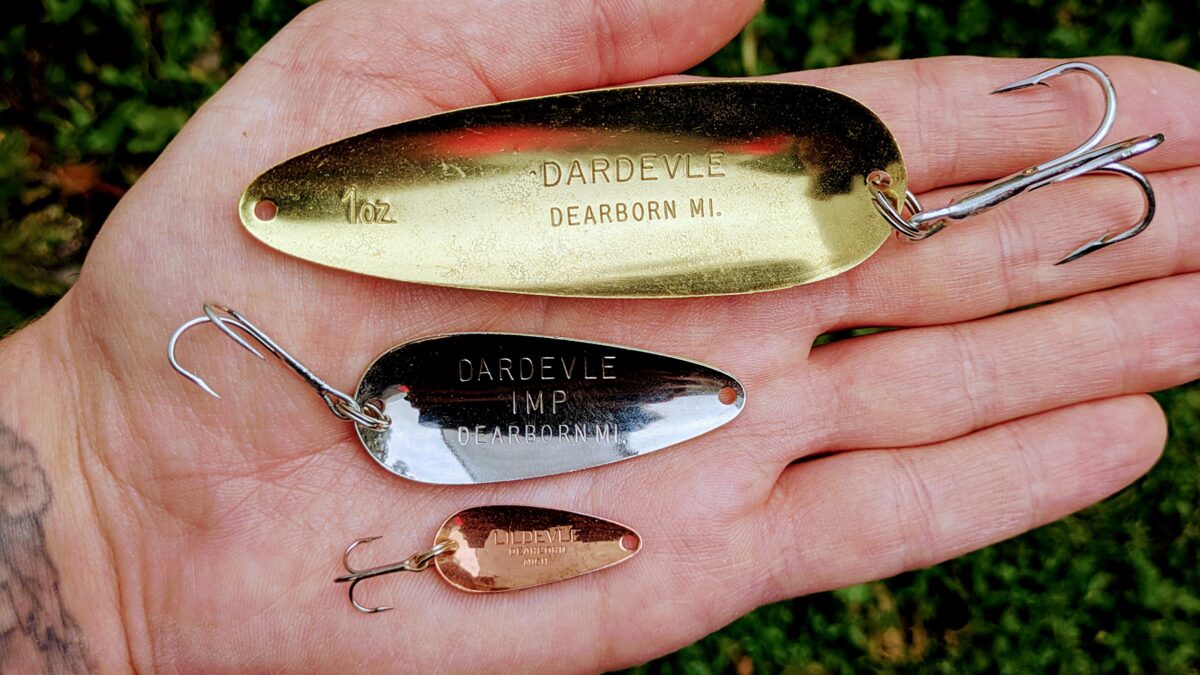
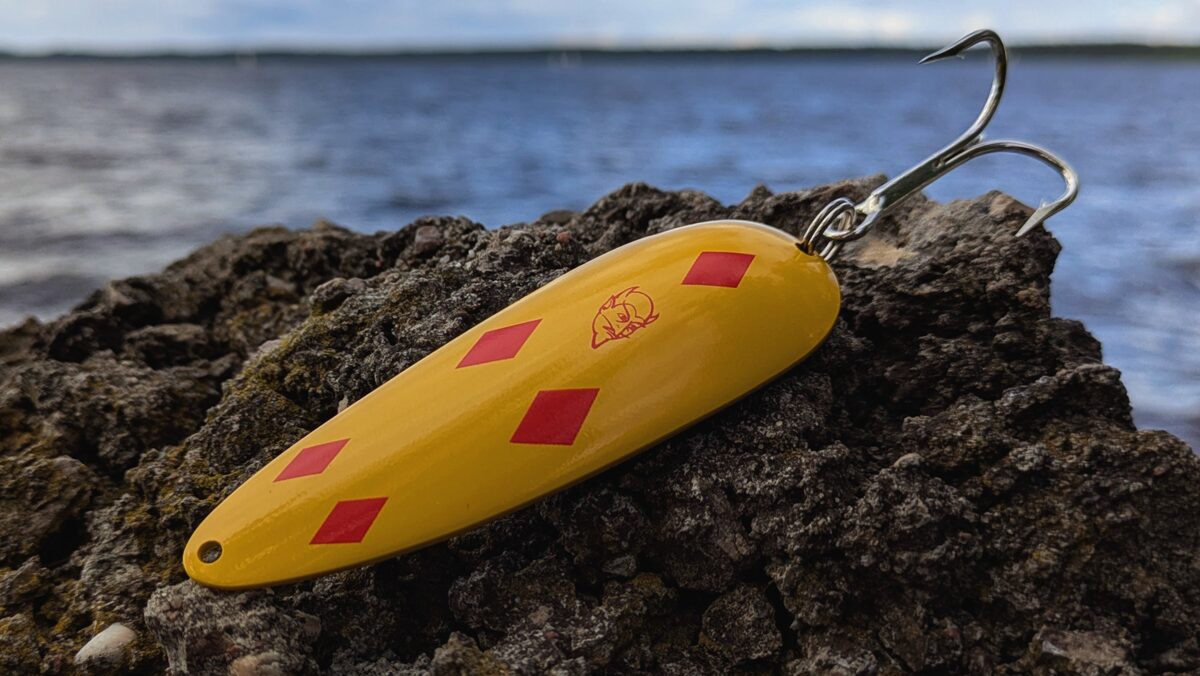
Dardevle is the king of this series, weighing 28 g and measuring 9.2 cm in length. It is the most sought-after spoon in North America for pike fishing, and in 120 years of existence it has caught more trophies than any other lure. It is made of 1.29 mm thick brass and has thicker edges and a thinner middle, which ensures a wide and heavy wobbling action even with a slow retrieve, making it ideally suited for the deeper spots of lakes and slow rivers when searching for trophy-size pike.
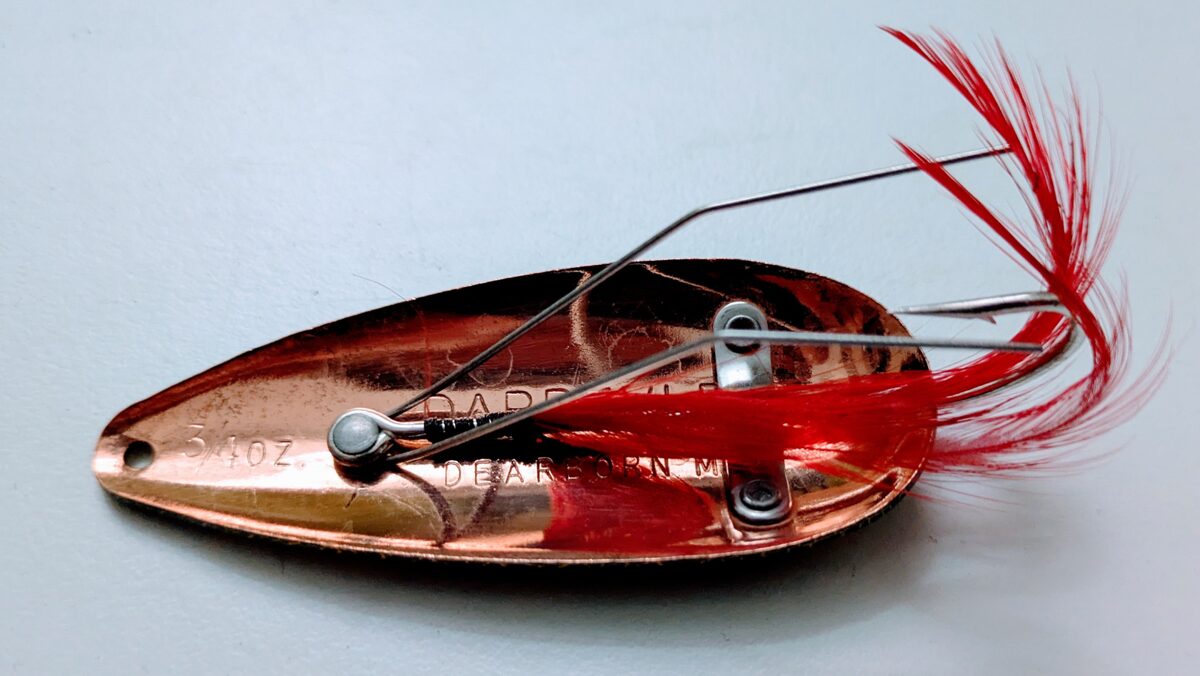
Dardevlet Klickers is made for situations where an extra stimulus is needed — sound, vibration and shine — to help attract predators in murky water or at times when they are more passive.
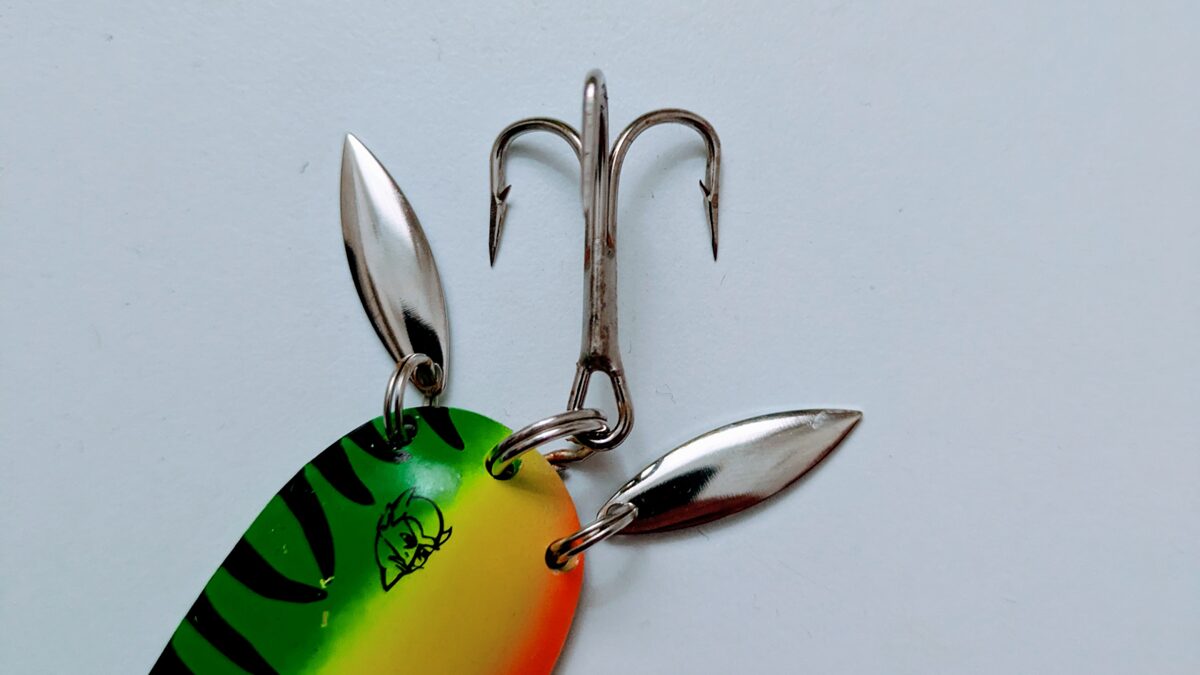
Dardevle Imp (11 g/5.7 cm) is an excellent perch spoon that often also attracts an occasional pike. It can also tempt a trout in a deeper and slower stretch of a small river.
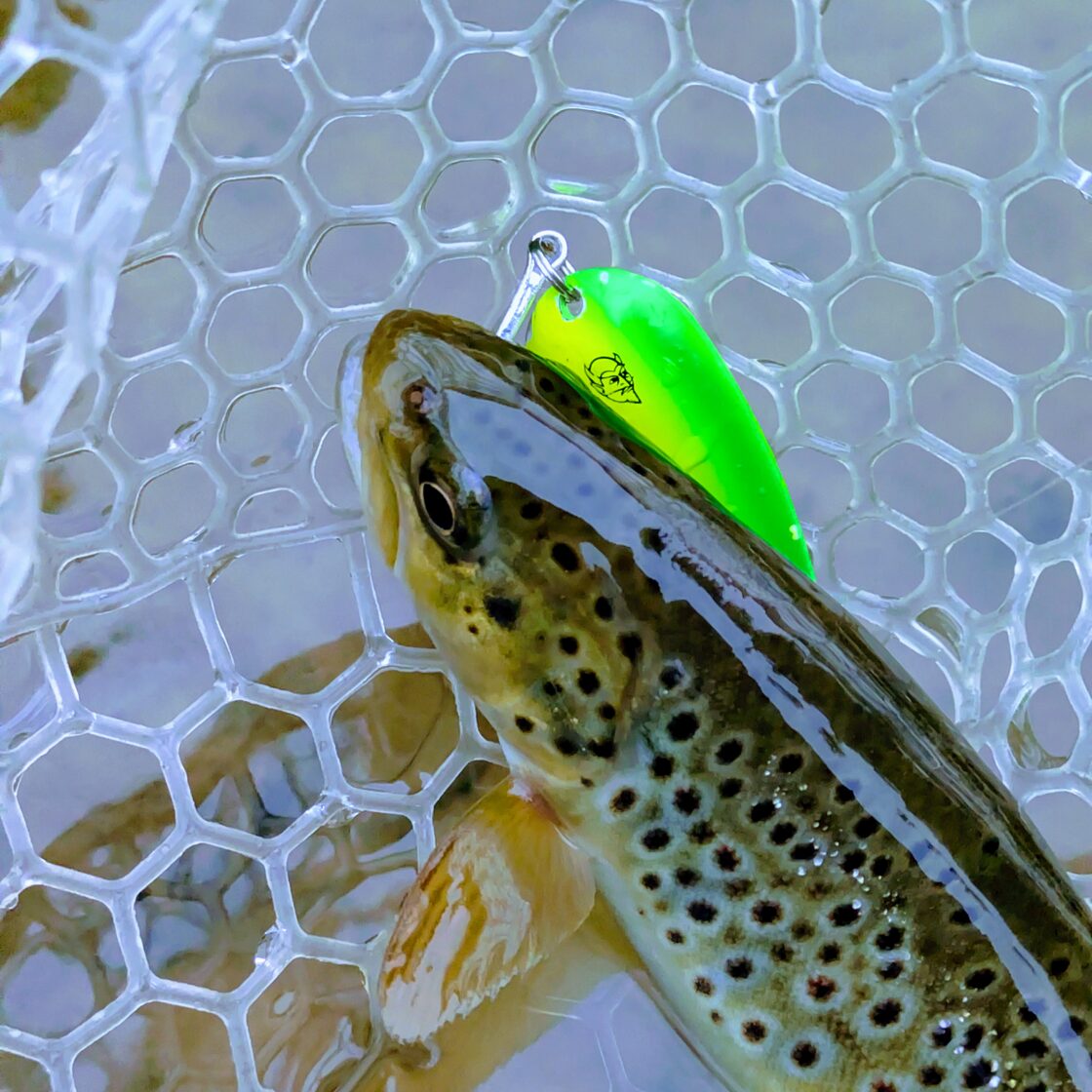
Dardevle Spinnie (7 g/4.5 cm) starts the trout-spoon range, but it catches perch just as well. Although it is heavier than a standard small-river spoon, Spinnie is a great choice for deeper pools and situations where you need to convince a bigger trophy.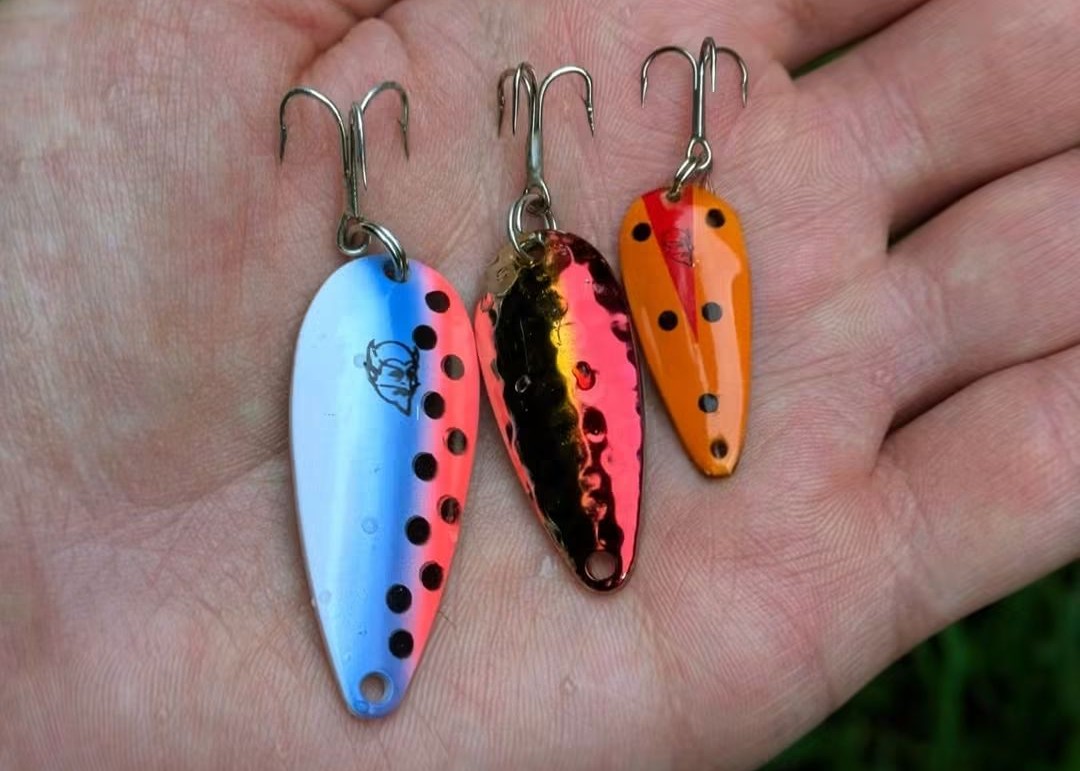
Dardevle Midget (5 g/3.5) and Lil Devle (3.5 g/2.8 cm) are the workhorses of trout rivers. In small rivers they catch trout and chub, and Lil Devle also catches grayling. They work great both in slow stretches and in fast runs, casting upstream and retrieving down. In deeper pools, after the cast you can wait a bit and let the spoon sink to also fish the bottom of the hole — the lure often attracts fish already during the descent.
Although spoon lures today are often unfairly forgotten, they are still among the simplest and most effective lures. Unlike many other Western manufacturers that produce their lures in China, Eppinger Dardevle have been made in the USA for more than 120 years — in Dearborn, Michigan, next to Detroit. This guarantees consistent quality that delights anglers all over the world.

TASMANIAN DEVIL trout spoons
In 1934 Eddie Wigston founded a retail store in the city of New Norfolk, located near the capital of Tasmania. He ran the company with his sons and sold radios, firearms and fishing equipment. One Friday night at a local club over a glass of beer, Eddie discussed with his sons the concept of a potential mass production of lures. The planned lure consisted of a hollow torpedo-shaped lead core, surrounded by a plastic body with curved wings. A wire loop with a hook attached to it had to be passed through the core, and from the outside it was painted in different colours and patterns. Important was also the name of the lure, which was chosen as the Tasmanian Devil. The name was taken from an aggressive native Tasmanian marsupial, which is found only in Tasmania.
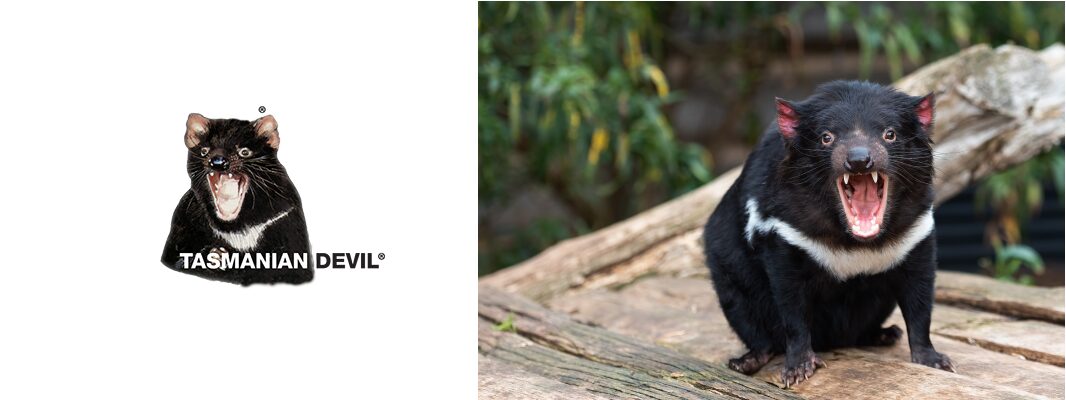
At the end of 1979, production finally began. Early versions of the lure were sold very quickly, as demand began to exceed supply. The original lures were handmade, which, after the development of suitable equipment and technologies, began to be produced in a larger volume. The lure is offered to the world in more than 100 colour combinations and 5 weights - 7g, 13.5g, 20g (dual depth), 26g and 45g (metal version for salt water). Recently, with the ecology in mind, the Tasmanian Devil range has also been joined by 7g and 13.5g lead-free versions, which are available for purchase in assaultlures.eu store.
As already mentioned in the description of the product, it can be used in several ways – trolling, jigging or casting and with it you can catch a wide range of predatory fish. As for use, there are several ways to install it, which will differ from the target fish, whether single hooks or treble hooks are used, as well as how often and convenient it will be to replace it.
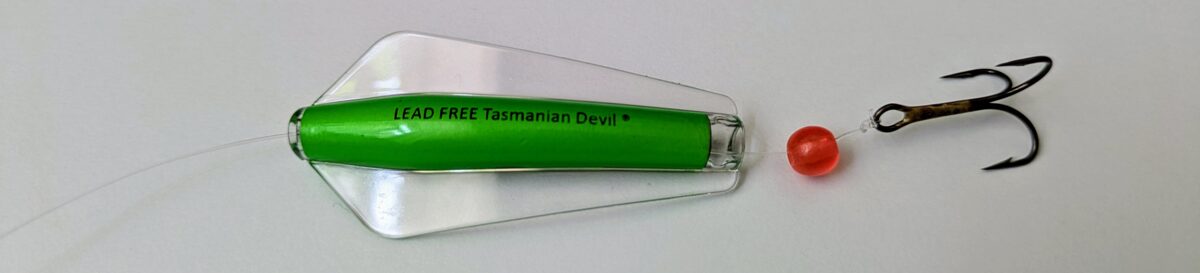
The lead-free Tasmanian Devil comes in a set with plastic bead and a treble hook that can be used in different systems depending on the specific situation you’re fishing in.

The most popular system used around the world (especially for catching salmonoids) is the fluorocarbon leader through the body, tied to split ring to which the hook is attached. This system is not so static and will not allow the twisting fish to lock up the hook against the lure and push it out so easily.
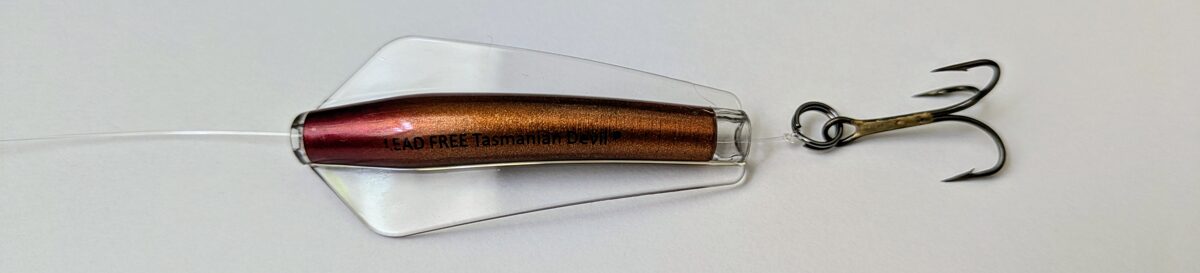
Split ring can be replaced or supplemented with a glass or plastic bead, which will work as an additional attractor.
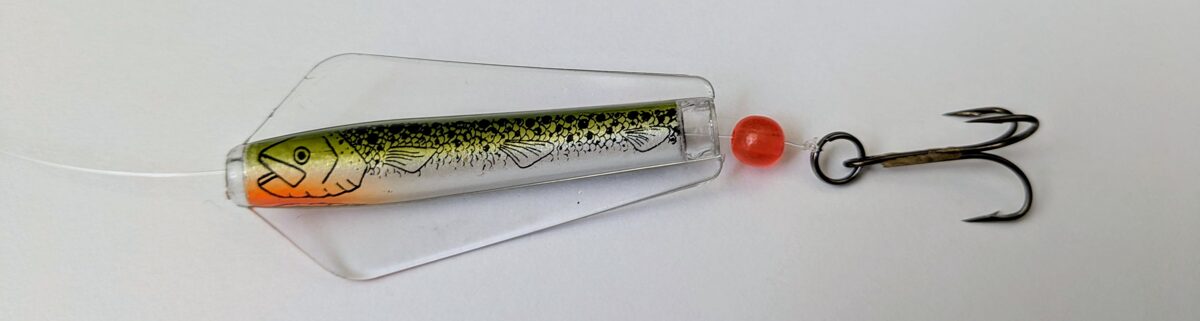
Targeting pike, a leader of titanium or any other material can be passed through the body and the hook attached at the end. This will make it easier to replace the lure and you will not need to tie leader each time, as in the case of fluorocarbon.
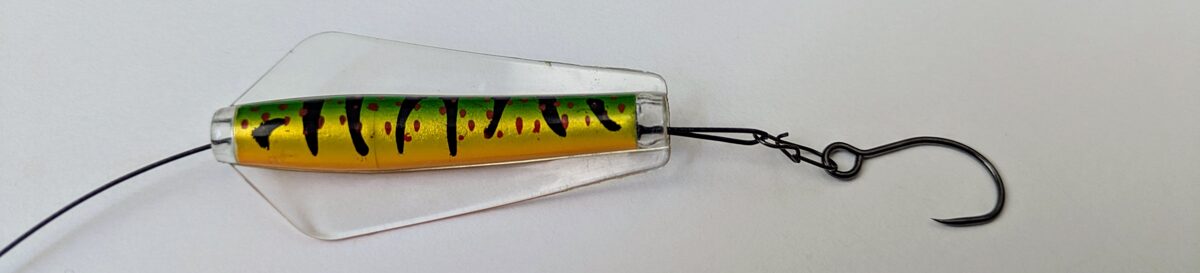
For faster lure replacement, using fluorocarbon, you can also use self-made cores made of some durable and flexible material such as steel or titanium, which will easily allow the lure to slide up the system during the discharge of the fish and will not allow the fish to get rid of the lure so easily. Here, however, it should be noted that the system should not be too long so as not to be visible to a potential salmonoid fish.
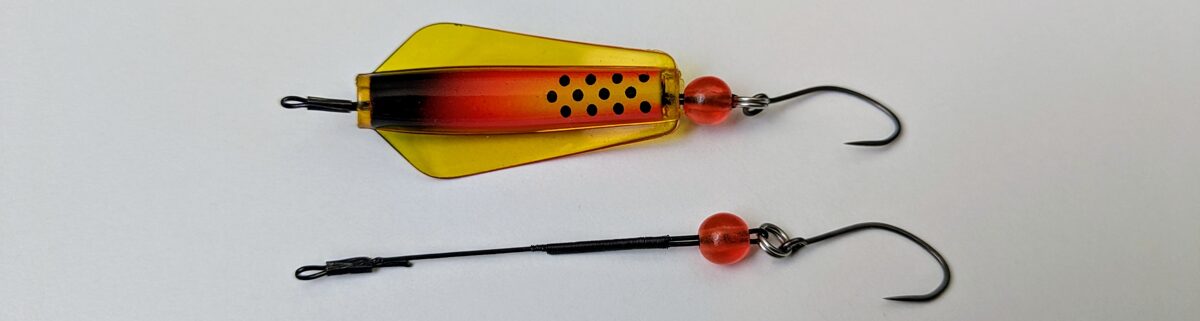
You should not use braided line through the body, because although the lure is made of plastic on the outside, it can damage or cut off the braid when it rubs along the line for a long time.
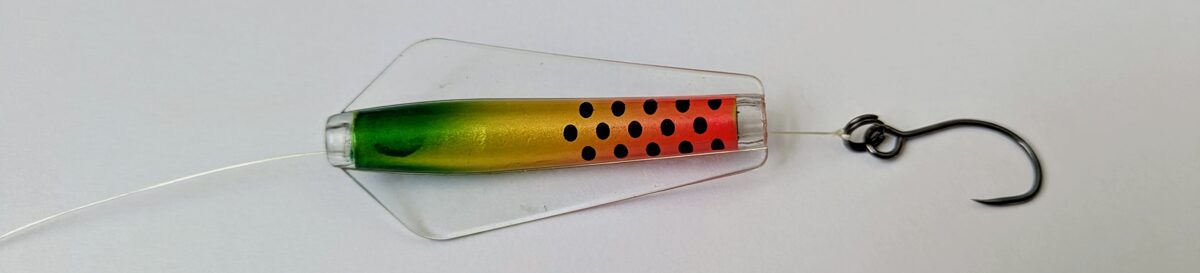
In faster flowing river sections or when trolling at a higher speed in a lake, the lure can be turned the other way around, thus reducing resistance.
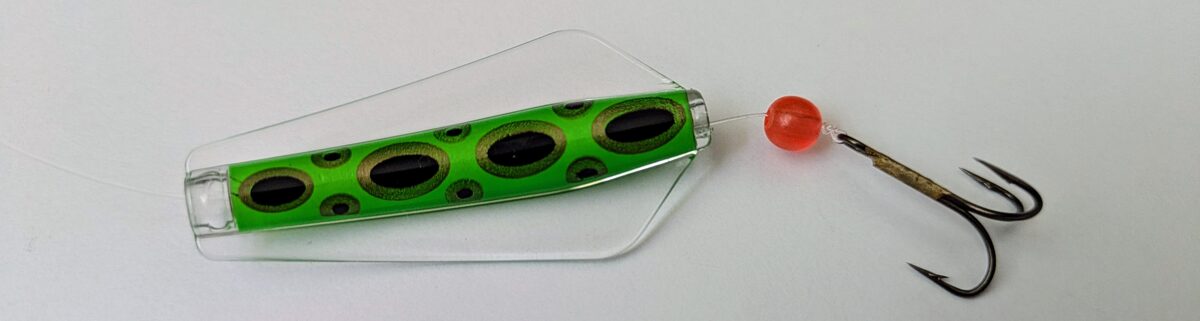
Since the lure is made of plastic, its body and wings can be slightly bent to adapt the lure play to individual situations. Recklessly folding or deforming the lure can also break it and such actions should be performed only at one's own risk. It should be remembered that bending the lure or broken lure because of the bending can be a reason to refuse the warranty if you want to use one.
Hopefully, this article will encourage you to try something new and diversify your daily fishing routine.
Tight lines!